
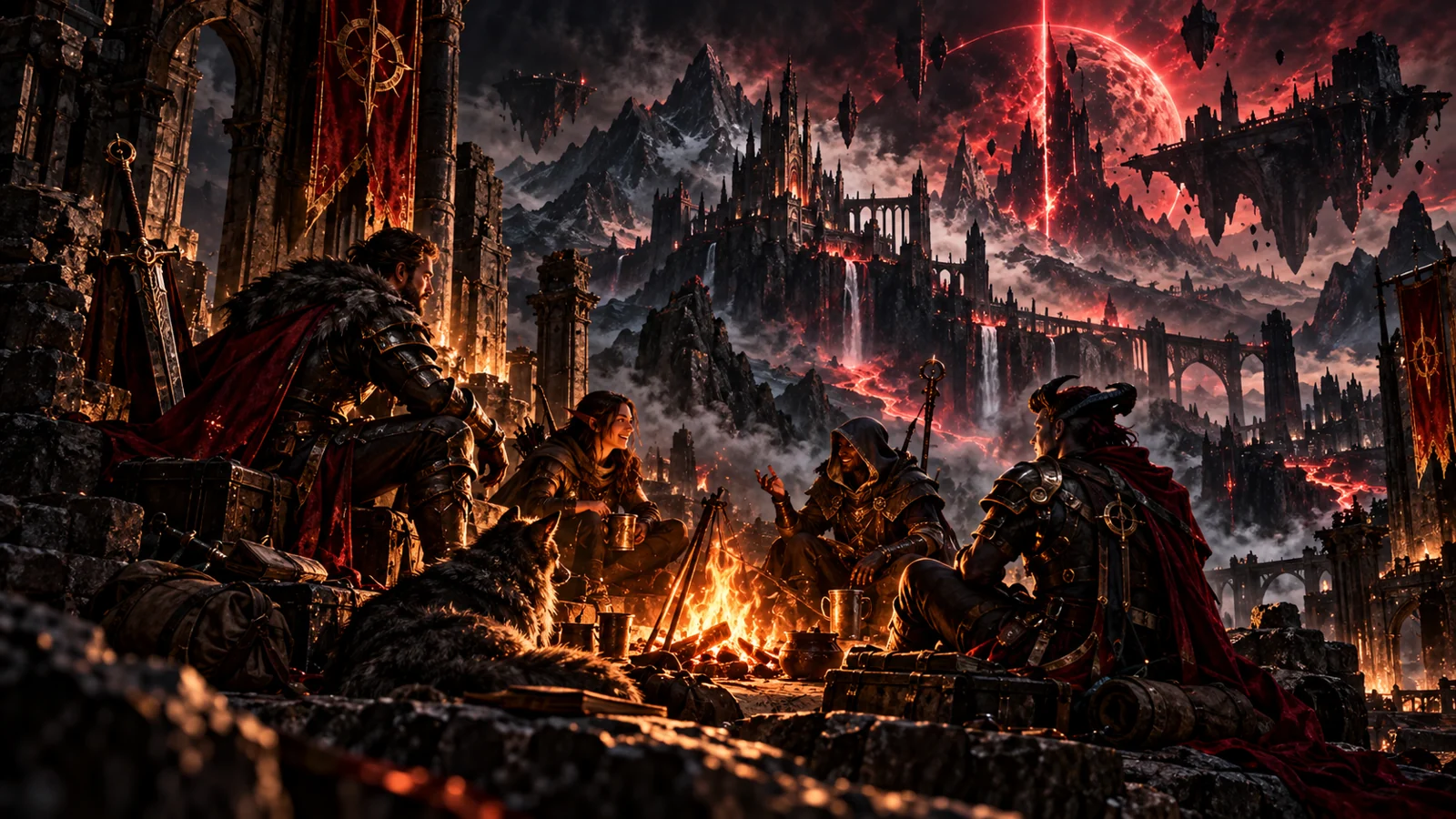
Shared stakes
An MMORPG can create a strange form of trust. Five strangers join a dungeon, understand their roles at different speeds, and try to solve problems together while an enormous fantasy world continues around them. The moment a difficult pull goes wrong, a scripted activity can become an improvisation.
Good teams communicate early
A quick greeting, a note about unfamiliar mechanics, or a calm request for a pause often does more for group success than one extra piece of equipment. Players who admit what they don't know can make a run easier for everyone.
Different players, different reasons
Some players love efficiency, others discovery, others just want to share a virtual place with friends. A healthy MMO makes room for those motivations rather than treating every activity as a speedrun.
Remember the stories
What remains after a session is rarely only the loot. It may be the ridiculous rescue that should not have worked, the healer who kept everyone standing, or the patient tank who explained a fight instead of leaving. Those are the moments that make persistent worlds feel alive.
Set the pace before the first pull
A group can agree on the destination and still disagree about the journey. One player wants to learn the route, another wants a fast clear, and a third has only half an hour. A brief conversation before starting makes those expectations visible. Ask whether anyone is new, agree on breaks and make room for a straightforward explanation when something goes wrong. This does not mean every group needs a formal briefing. It means giving people a chance to say what kind of session they can realistically share.
Make room for the next regular
Communities often grow through small invitations rather than grand recruitment drives. Remember the helpful player from a previous run. Invite the quiet newcomer back. Explain the mechanic before the mistake becomes an argument. None of this requires ignoring your own limits or staying in an unpleasant group. It simply treats other players as people with a learning curve instead of interchangeable roles. Equipment will eventually be replaced, but a group that trusts one another can become a reason to log in long after the next item has lost its shine.